Happy Brush: The Hand-Painted Typeface for Joyful Design
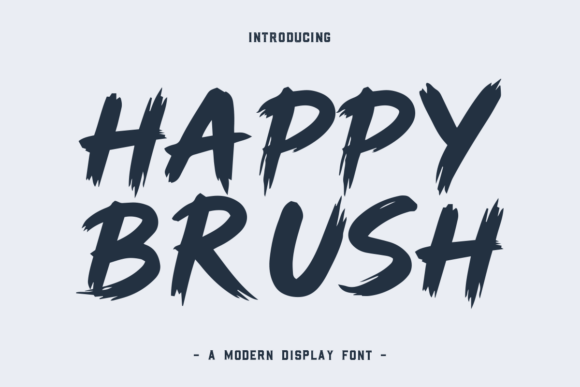
There's a certain energy that comes from genuine, hand-painted lettering. It's not perfect. The strokes have a life of their own, with slight variations in thickness and a texture that feels human. This is the exact spirit captured in the Happy Brush typeface. It’s not just a font; it’s a burst of spontaneous creativity designed to inject warmth and personality directly into your work.
Imagine a design that feels approachable before you even read the words. That’s the power of a well-crafted display font like Happy Brush. Its smooth, flowing strokes mimic the natural motion of a brush, creating a rhythm that’s both casual and stylish. The slightly imperfect lines are its strength, offering an authentic, handcrafted look that digital perfection often misses. This makes it a valuable design asset for anyone looking to create an immediate, friendly connection with their audience.
Where Does This Creative Font Shine?
The versatility of a handwritten font like Happy Brush is one of its greatest assets. It’s not confined to a single style or project. Think about the first impression a brand makes. In logo design, Happy Brush can communicate a company's personality as creative, approachable, and full of life. It’s perfect for businesses in the wellness, artisan food, boutique retail, or creative service spaces where a personal touch is part of the brand identity.
Beyond logos, this typeface excels in environments where engagement is key. For social media graphics, its energetic rhythm stops the scroll. A quote post, a promotional banner, or a story highlight featuring Happy Brush feels less like an advertisement and more like a note from a friend. It brings that same lively quality to packaging design, making a product on the shelf feel unique and full of character. For wedding invitations, event posters, or even editorial design in a magazine, it adds a layer of whimsy and joy.
Pairing for Professionalism and Readability
While Happy Brush is a standout creative font, its effectiveness increases when used thoughtfully. As a display font, it’s built for headlines, logos, and short bursts of impactful text. Using it for long paragraphs would sacrifice readability. The real skill lies in creating a successful font pairing.
A practical approach is to let Happy Brush handle the personality-driven elements and pair it with a clean, neutral companion for body text. Consider these combinations:
- With a Classic Serif: Pairing Happy Brush with a timeless serif font creates a beautiful contrast between organic warmth and traditional structure. This works well for editorial design or sophisticated branding that wants a touch of approachability.
- With a Clean Sans Serif: For a more modern, crisp look, combine it with a geometric or humanist sans serif font. This is an excellent choice for web design, presentations, and social media graphics where clarity on screens is paramount.
This strategy ensures your design maintains a clear visual hierarchy. Happy Brush draws the eye to the key message, while the supporting font ensures the rest of your content is easy to digest. It’s a balance that elevates a project from casual to professionally considered.
Making a Strategic Choice for Your Project
Choosing a premium font is a practical investment in your project's toolkit. Before integrating Happy Brush, evaluate its fit. Does its playful, energetic personality align with the message you need to convey? For a corporate law firm, it might be too casual. For a yoga studio, a children's book author, or a handmade soap business, it could be the perfect match.
Always test the font in context. Most quality font distributors allow you to preview your own text. Type out your business name, a key headline, or a call-to-action. Does the letter spacing feel right? Do the swashes or alternate characters (if included) enhance or distract from your message? Check the licensing as well. Ensure the commercial license covers your intended use, whether for a client's logo design, products for sale, or digital design assets.
Ultimately, Happy Brush is more than just a handwritten font. It’s a tool for storytelling. It carries a feeling of joy, spontaneity, and human touch that resonates in today’s digital landscape. By using it strategically—in the right context, with the right partners, and for the right audience—you can create designs that don’t just look good, but feel genuinely alive and engaging.