Rosie: The Quirky Valentine's Font with Endless Charm
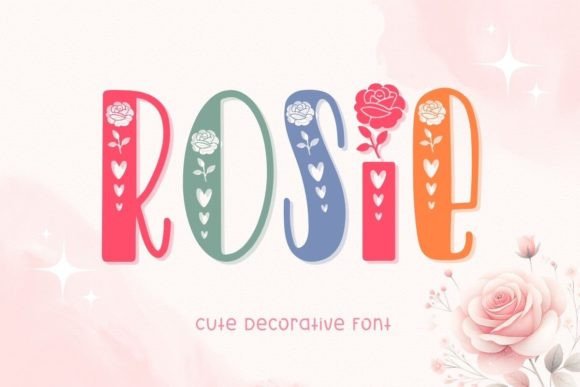
Finding a typeface that feels genuinely personal can be a challenge. Many fonts look good on a specimen sheet but fail to connect with an audience. Then there are fonts like Rosie. This isn't just another handwritten font; it's a creative font that bakes personality directly into its letterforms. At its core, Rosie is a display font that marries a quirky, handwritten style with clever Valentine’s-themed silhouettes. Imagine the loops of a 'g' or the dot of an 'i' subtly incorporating a heart, a bow, or a flower. This unique characteristic makes it more than just a typeface; it’s a design asset with a built-in visual story.
The visual personality of Rosie is approachable, playful, and unapologetically sweet. It avoids the stiffness of a traditional serif font or the neutrality of a sans serif font. Instead, it leans into the warmth and spontaneity of a script font, but with a more structured, legible foundation. The "quirky" style comes from its slightly irregular baselines and the way the decorative elements are integrated without overwhelming the text. This balance is crucial. It allows the font to be expressive while still maintaining the clarity needed for effective communication, a key consideration in any modern typography project.
Where Rosie Truly Shines: Real-World Applications
Rosie's strength lies in its ability to inject a dose of heartfelt charm into projects where a standard font might fall flat. Its value is most apparent in specific, tangible applications. For brand identity work, particularly for small businesses in the lifestyle, wedding, artisanal, or gifting sectors, Rosie can become the cornerstone of a recognizable look. Think of a bakery's logo, a boutique stationer's branding, or the packaging for a handmade candle. Here, the font communicates care, creativity, and a personal touch before a customer even reads the copy.
For entrepreneurs and content creators, the applications are incredibly versatile. It’s a natural fit for social media graphics, especially for quotes, announcements, or promotional posts on platforms like Instagram and Pinterest. The font's inherent style stops the scroll. In packaging design, it can elevate a product from generic to gift-worthy, making the unboxing experience part of the brand promise. For editorial design, consider using it for pull quotes, chapter headings in a lifestyle magazine, or the title of a recipe card. It brings a human, crafted element to the printed page.
Don't overlook its potential in digital spaces. While not suited for body text, Rosie can be a fantastic accent in web design. Use it for a captivating homepage hero statement, a special "About Us" page, or to highlight a limited-time offer. Its whimsical nature also makes it ideal for personal projects: custom wedding invitations, holiday cards, personalized mugs, or fun t-shirt designs. The key is to use it where you want to make an emotional connection and convey a sense of joy or affection.
Making Rosie Work for You: A Practical Guide
Choosing a premium font like Rosie is an investment. To ensure it delivers value, you need to evaluate it thoughtfully for your specific project. First, consider the visual hierarchy. Rosie is a display font, meaning it’s designed for headlines, titles, and short bursts of impactful text. Pairing it with a clean, neutral sans serif font for body copy is almost always the right move. This creates a clear contrast, allowing Rosie’s personality to shine without sacrificing readability for longer passages. A pairing like Rosie with a font like Lato or Open Sans can create a balanced and professional yet friendly aesthetic.
Before you commit, test the font rigorously. Type out the specific words and phrases you'll be using. Does the word "Love" look appealing with its decorative elements? Are all the ligatures and alternates working as expected? Check the character set. Does it include the punctuation and symbols you need? Evaluate its readability at the actual size it will be used, whether on a mobile screen or a printed card. The goal is to ensure its charm doesn't come at the cost of clarity.
Finally, understand the licensing. As a commercial font, Rosie will come with a license that dictates how you can use it. If you're a designer creating a logo for a client, you need to ensure the license covers that use. If you're a small business owner using it on your merchandise, confirm the license permits commercial use for end products. Reputable font foundries are clear about this. Using a font correctly is not just about legal compliance; it's about respecting the craft of the type designer and ensuring the integrity of your own work. When used with intention, a font like Rosie becomes more than just letters—it becomes a vital part of your creative voice.